(Photo courtesy of SM ENTERTAINMENT)
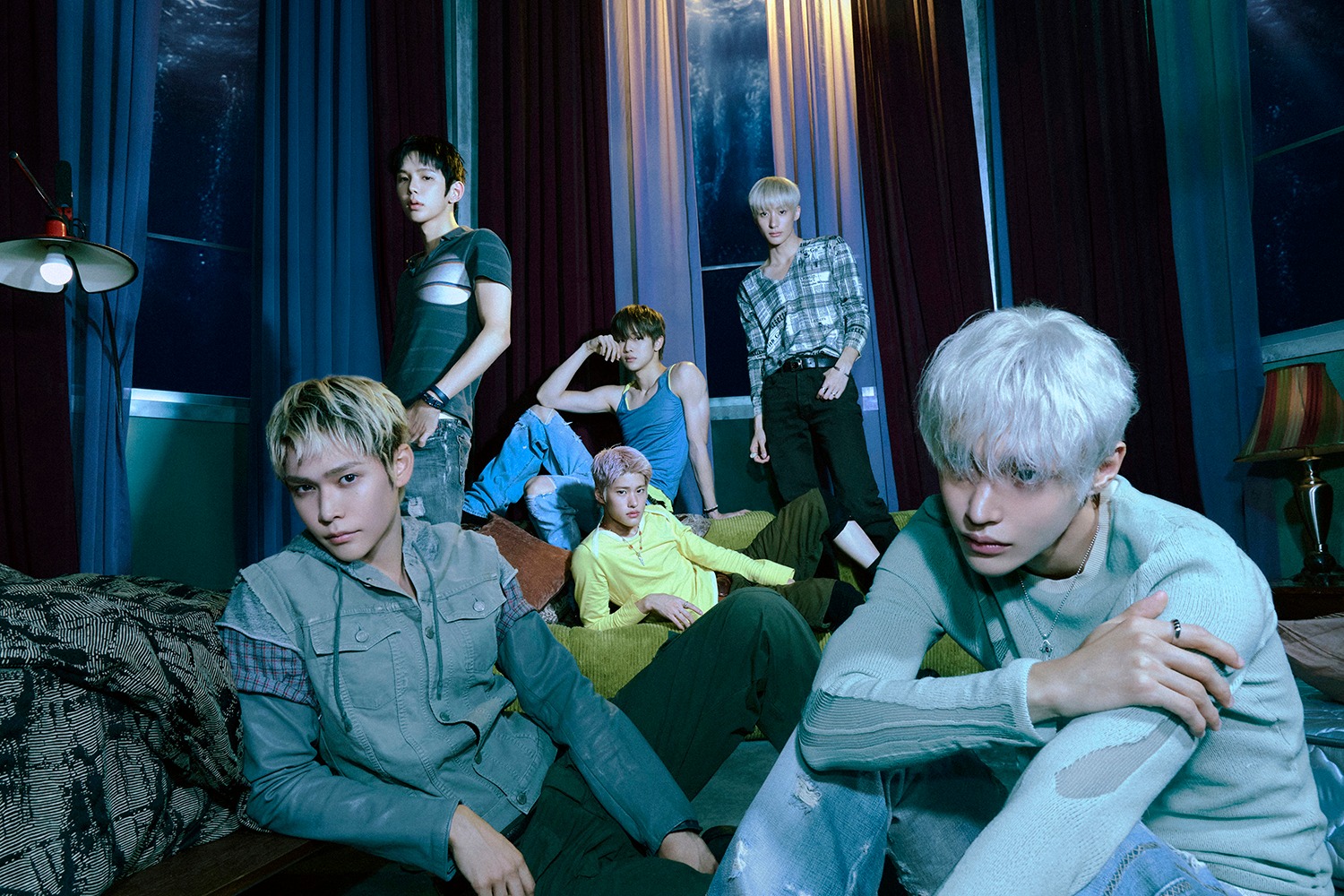
[Hanteo News = Reporter KIM YEONWOO] Beyond listening to music and watching music videos, fans can now explore an artist's fictional universe through literature. This is the approach RIIZE has taken with its new single ‘Insomnia’. By bringing together music, visuals, fiction, and illustrations to create a unified narrative, the group offers a deeper, more layered exploration of the emotions behind the song.
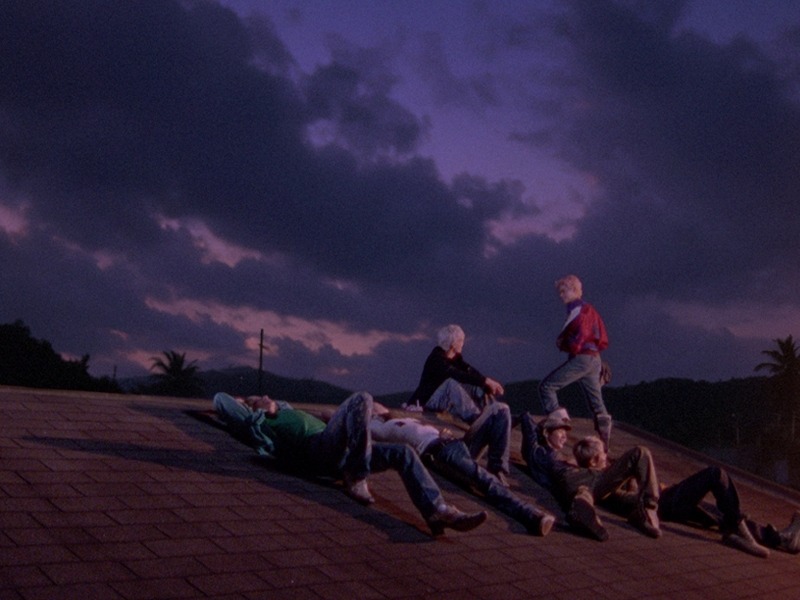
RIIZE released its single ‘Insomnia’ on October 26. The acoustic pop track combines melodic guitar arrangements with restrained vocals, capturing the increasingly vivid thoughts of someone who comes to mind as the night grows deeper and the complex emotions that follow. The music video brings these feelings to life through a drama-like narrative centered on characters struggling to fall asleep.
What makes this comeback particularly noteworthy is how the story extends beyond the music itself. Science fiction author Cheon Seon-ran wrote individual side stories for each member, while illustrator NOMA brought them to life through artwork. Although the six stories explore different personal struggles, they are interconnected within a shared fictional universe. As a result, ‘Insomnia’ becomes not simply a song to listen to, but a journey through literary imagination.
Six Members, Six Stories
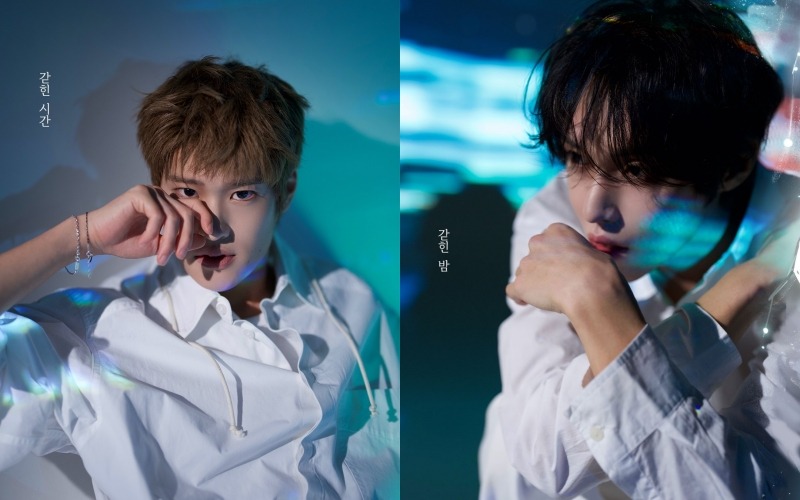
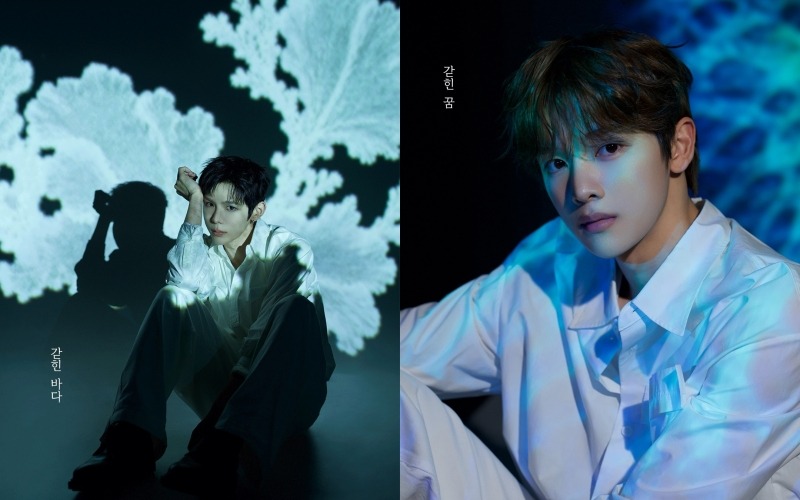
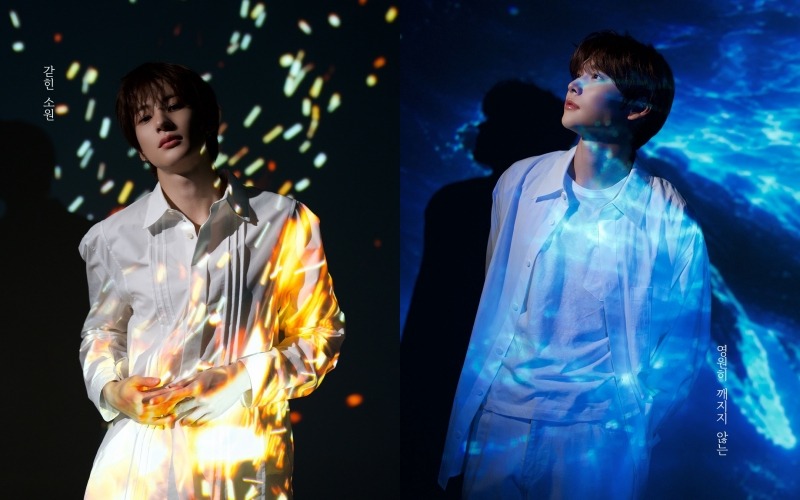
The project consists of six side stories: SOHEE's ‘Closed Time’, WONBIN's ‘Closed Night’, SHOTARO's ‘Closed Sea’, SUNGCHAN's ‘Closed Dream’, ANTON's ‘Closed Wish’, and EUNSEOK's ‘Something That Will Never Break’.
SOHEE's ‘Closed Time’ follows a character who begins to sense that something is wrong with the space and time around him. As SOHEE notices that his bed seems to have grown smaller and gradually loses his memories of his friends, he becomes the subject of a researcher's observations. A secret hideout built from discarded objects, a clock stopped at noon, and another clock featuring a whale instead of a cuckoo all blur the boundaries between reality and the surreal. SOHEE's behavior, resembling that of a teenage boy despite his actual age, further emphasizes the sense of suspended time and confusion surrounding his memories.
WONBIN's ‘Closed Night’ introduces characters who have lost their memories of one another's names and identities. WONBIN cannot remember the person greeting him or even the names of his friends. The story suggests that a wish made in the past and hypnotic suggestions may have caused this situation, leaving the characters with no way to escape the cycle unless they recover one another's names. The desire to remain together paradoxically results in an inability to recognize one another, highlighting the complicated relationship between human connection and memory.
SHOTARO's ‘Closed Sea’ unfolds around an unfamiliar place, a blue aquarium, and the feeling of waiting for someone. As SHOTARO reflects on coral and jellyfish, contemplating the difference between remaining in one place and drifting without a destination, his thoughts echo the uncertainty people experience when facing the future. A whale appearing in a lake and the recurring feeling of waiting for someone also connect his story to the others. The sea becomes more than a setting, serving as a space where the character reflects on the direction of his life.
SUNGCHAN's ‘Closed Dream’ features a character named J, who appears to be the perfect romantic partner, someone who understands SUNGCHAN completely. SUNGCHAN wishes to remain with J forever, but strange events begin unfolding in the world they inhabit. Torn between waking from the dream and returning to reality or remaining in a seemingly perfect relationship rather than facing an imperfect world, SUNGCHAN embodies both the desire for an ideal relationship and the anxiety hidden beneath it. The story invites readers to consider whether the feeling of being perfectly compatible with someone is truly permanent or simply something that emerges at a particular moment.
ANTON's ‘Closed Wish’ explores the inner world of someone who perceives reality differently from others. ANTON's sketchbook appears entirely black, yet within its pages are the landscapes he sees, including the sea, a beach, starfish, and dolphins. To his teacher, however, the drawings appear to be nothing more than black images. Unable to fully explain his perception of the world to others, ANTON comes to believe that wanting something creates suffering when that desire goes unfulfilled. He reasons that eliminating the desire itself might also eliminate the pain of not getting what one wishes for.
EUNSEOK's ‘Something That Will Never Break’ provides an important clue to understanding the shared universe connecting all six stories. After encountering a mysterious boy in a park during his childhood, EUNSEOK discovers that he possesses the ability to make other people's wishes come true. Wanting to stay with his friends forever, he creates a space where they can remain together. Yet his attempt to prevent them from forgetting one another ironically leads to their memories of each other gradually fading. EUNSEOK is left struggling with whether to reveal the truth and force his friends to confront their pain or allow them to remain in that space without ever knowing what has happened.
Exploring RIIZE's ‘Insomnia’ Through Cheon Seon-ran's Literature
At the heart of all six stories are memory, wishes, and the desire to preserve relationships forever. EUNSEOK tries to hold on to precious moments with the people he loves, while ANTON believes that if wishes lead to suffering, it may be better to abandon the act of wishing altogether. Although the desire to remain together and the wish to free oneself from desire appear to point in opposite directions, both stories ultimately raise questions about how people should navigate relationships and emotions.
The narratives, which move between past and present, also prevent each character's circumstances from remaining isolated incidents. The space EUNSEOK creates to stay with his friends, the wishes and memories that become intertwined within it, and the present in which they gradually forget one another all connect the six stories into a larger narrative. The paradox of trying to preserve memories only to cause their disappearance also complements the dreamlike atmosphere of ‘Insomnia’. Rather than attributing the fractures in this fictional world to the decision of a single character, the story reveals greater complexity when viewed as the result of conflicting desires and perceptions.
The narrative perspectives and storytelling techniques used to convey the characters' inner worlds are equally noteworthy. Some stories follow their characters closely, while others adopt the perspective of an observer, revealing their actions and surroundings from a distance. At times, readers are invited to follow a character's thoughts directly. At others, they must piece together unexplained clues or uncover information unknown to the characters themselves. These variations in narrative distance and access to information create different forms of tension throughout the stories, encouraging readers to fill in the gaps of the fictional universe through their own interpretations.
The characters' similarities to the RIIZE members' real-life personalities and public images also help fans connect with the stories. Those already familiar with RIIZE may recognize aspects of the members in their fictional counterparts' words and actions, allowing them to imagine sides of the artists that differ from their stage personas. As the real-life identities of the artists intersect with fictional characters, the members begin telling their stories not only through music but also through the language of literature.
NOMA's illustrations further extend the emotions conveyed through the writing into visual imagery. The artwork helps bring to life the spaces and atmospheres that may be difficult to fully visualize through words alone, allowing readers to move between text and images as they experience each story. Music, music videos, fiction, and illustrations each serve different purposes while coming together to complete a single narrative universe.
K-POP and Literature: New Ways of Bringing Two Art Forms Together
RIIZE is not alone in exploring collaborations between K-POP and literature. The ways artists and writers work together are becoming increasingly diverse. Whether by developing an album's themes into a separate story or expanding the emotions expressed in song lyrics into poetry and prose, artists are finding more ways to communicate their musical messages through literature.
KiiiKiii introduced ‘Running in a Dress’, a story by writer Lee Seul-ah, in connection with its second mini-album ‘Delulu Pack’. The story follows a narrator who has treated being ordinary as a survival strategy until she encounters a friend who proudly calls herself a "princess". The two characters run on treadmills and pass through a mysterious period between December 31 and January 1. Exploring the importance of expressing oneself rather than hiding behind others' expectations, the story offers a literary interpretation of the album's individuality and imagination.
Red Velvet's JOY also collaborated with poet Cha Jeong-eun for her first mini-album ‘From JOY, with Love’. Four pieces of writing centered on love were released as promotional content for the album, exploring different emotions ranging from playful love and friendship to self-love and romantic affection. By expressing the many forms of love contained within the album through poetic language, the collaboration allowed audiences to connect with its emotional themes even before listening to the music.
These examples demonstrate that collaborations between K-POP and literature are not limited to a single format. Depending on the message an artist hopes to convey, an album's themes can become a separate narrative, while emotions expressed in lyrics can be reinterpreted through poetry or prose. Music remains at the center, but literature provides another artistic language through which fans can engage with the work.
Beyond the Song…A New Way to Experience Emotions
In a written interview, RIIZE shared their thoughts on the meaning of ‘Insomnia’ and what listeners should pay attention to. WONBIN explained that music does not always need to offer comfort, emphasizing the importance of allowing oneself to fully experience emotions, even loneliness. ANTON selected the lyric "I stay up all night till I see the morning" as a highlight, while EUNSEOK chose the members' harmonies as the song's standout moment. EUNSEOK also expressed his affection for the group's fandom, BRIIZE, describing fans as a comforting presence, much like the "you" addressed in the song.
The connections between literature and K-POP are becoming increasingly diverse. Following author Han Kang's Nobel Prize in Literature, Korean literature has attracted worldwide attention, while K-POP has established itself as a major force in global popular culture beyond music alone. Bringing these two fields together is meaningful not simply because they can share their respective influence, but because literature can communicate stories that music alone may not fully express, while music can introduce new audiences to literary works.
RIIZE's ‘Insomnia’ demonstrates these possibilities by weaving music, fiction, and illustrations into a unified narrative. Through such collaborations, K-POP can convey emotions in new ways through literature, while literary works can reach a broader audience of readers and listeners through music.
The hope is that these collaborations will continue beyond one-off projects, allowing Korean literature and K-POP to enrich one another's appeal and ultimately contribute to an even greater presence for Korean culture on the global stage.
yeonwoo38@hanteo.com


